Bezel vs Prong: Holding the Stone
The immense pressure and infinite patience of securing gems.
The Physics of the Set
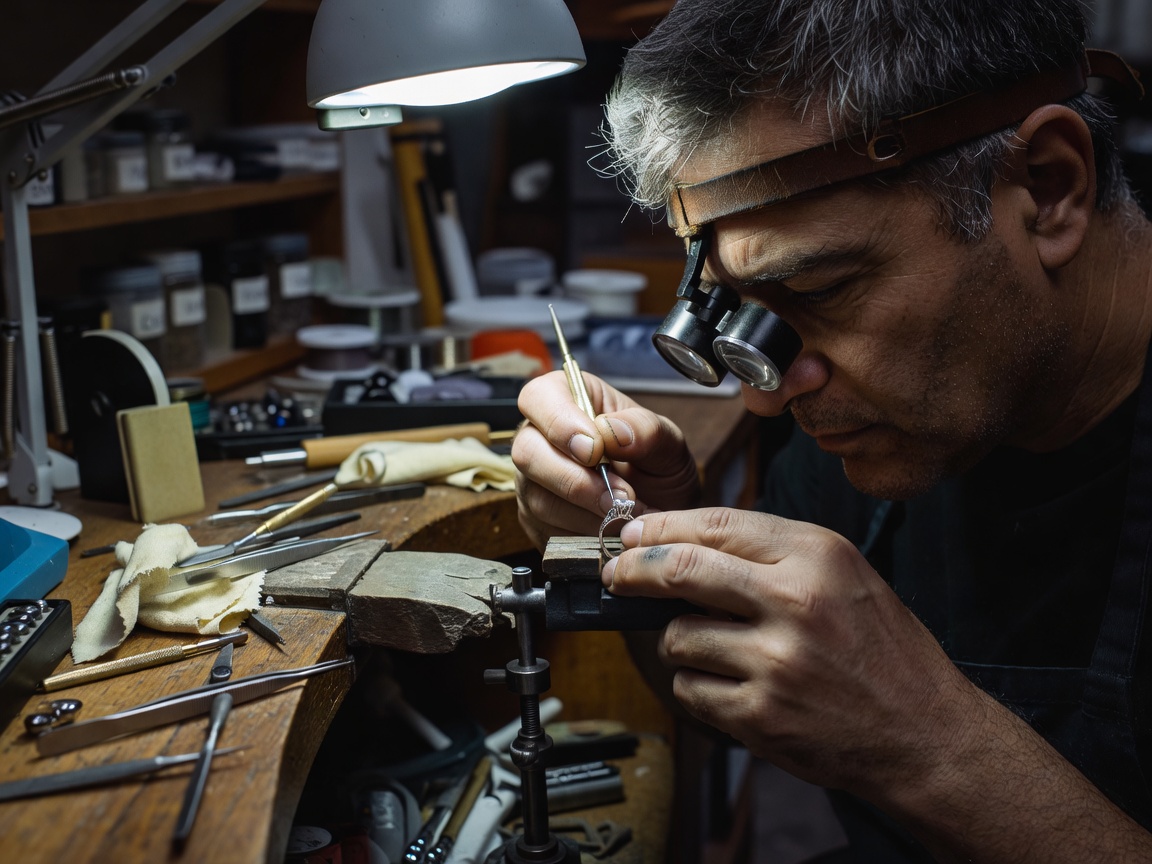
Setting stones is a terrifying process for a beginner. You are required to take hardened steel tools and apply forceful, direct pressure onto fragile, expensive gemstones. A slip of a graver or an uneven push of a prong can chip a sapphire or shatter a tourmaline instantly.
At its core, setting relies on cold-forging. The jeweler cuts a precise seat for the stone, rests it inside, and then pushes, hammers, or rubs the surrounding metal down over the girdle of the gem, trapping it permanently.
Primary Setting Styles
The Bezel Setting
One of the oldest and most secure methods. A thin strip of metal (the bezel wire) is soldered entirely around the stone's perimeter. Using a bezel rocker or a hammer handpiece, the metal is burnished tightly over the edge of the stone. It offers maximum protection for softer stones like turquoise or opal.
The Prong Setting
Designed to let light flood into faceted gems. Wire prongs are soldered to a base. Using specialized setting burs in a flex-shaft, small notches (seats) are carved into the interior of the prongs. The stone snaps perfectly into these seats, and the tops of the prongs are pushed over and rounded off using a cup bur.
- Setting Burs: Microscopic steel drill bits shaped perfectly to match gem pavilions.
- Pusher: A steel rod set in a wooden handle, used to force prongs over the stone.
- Burnisher: Highly polished steel or agate used to smooth bezel edges without scratching the gem.
- Optivisor: Head-mounted magnification essential for ensuring seats are cut cleanly.